About the Lab
Residuals Lab builds the research infrastructure behind Tünde’s research designs, adding a fourth pillar to her academic work alongside research, teaching, and service.
ResLab does access work: finding institutional records, negotiating access to them, and understanding the legal and institutional conditions under which they can be used. These records often sit across different agencies and come with their own permissions, restrictions, and documentation. Each of the external datasets behind Tünde’s current projects took years to secure.
ResLab also does data work: building variables and data extensions before the research design is executed. Because we work closely with the organizations that generate the records, we often know much more about the underlying data-generating process than the administrative files alone reveal. That allows us to construct measures that standard register data do not provide.
Together, access work and data work create two extra layers of research infrastructure before the econometric analysis begins. The first gives us data that other researchers do not have. The second lets us measure things that existing variables do not capture. That is the lab’s front-end moat: by the time we execute a research design, much of the empirical advantage has already been built into the data.
Why a lab?
ResLab grew out of a practical problem. Each new project required years of access work, new agreements, new workflows, and plenty of trial and error. Starting from scratch each time made little sense. The lab gives each project a way to leave behind something the next one can use.
That practical problem also became an organization-design question. Tünde researches and teaches entrepreneurship, and ResLab lets her apply those ideas to the organization of her own research. Roles, routines, and workflows are designed around the kind of work the lab actually does, with the goal of improving research quality.
The lab also lets one organization generate several payoffs from the same work. For Tünde, it builds durable research infrastructure. Academic researchers get a setting in which to work on consequential research problems and develop judgment. Bachelor- and master-level students get challenging work, ownership, and analytical skills they can take into careers outside academia. External partners get useful insight and a reliable way to work with researchers. We think of this as one tree, several harvests.
Team
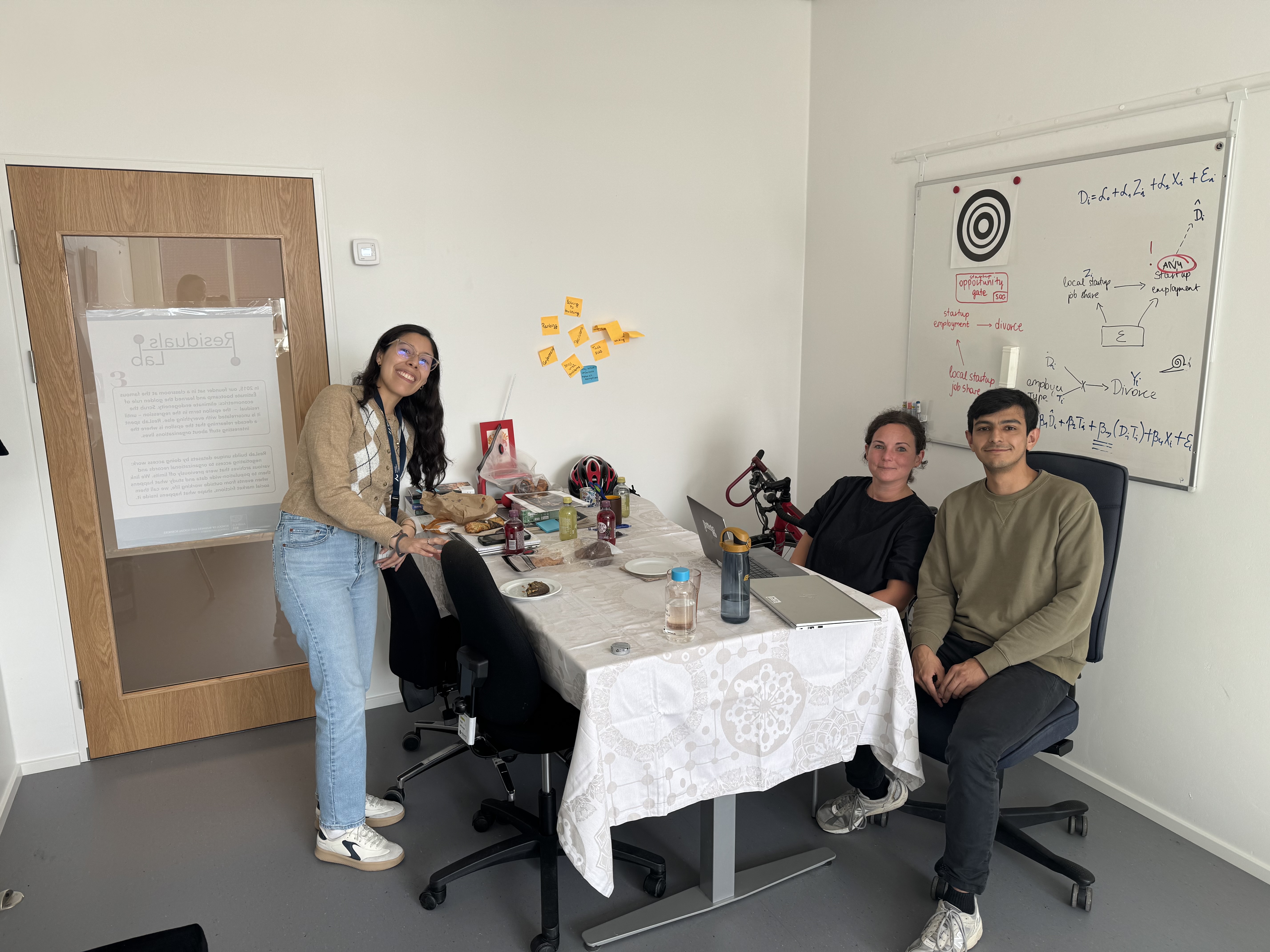
Team photo from All-Hands meeting
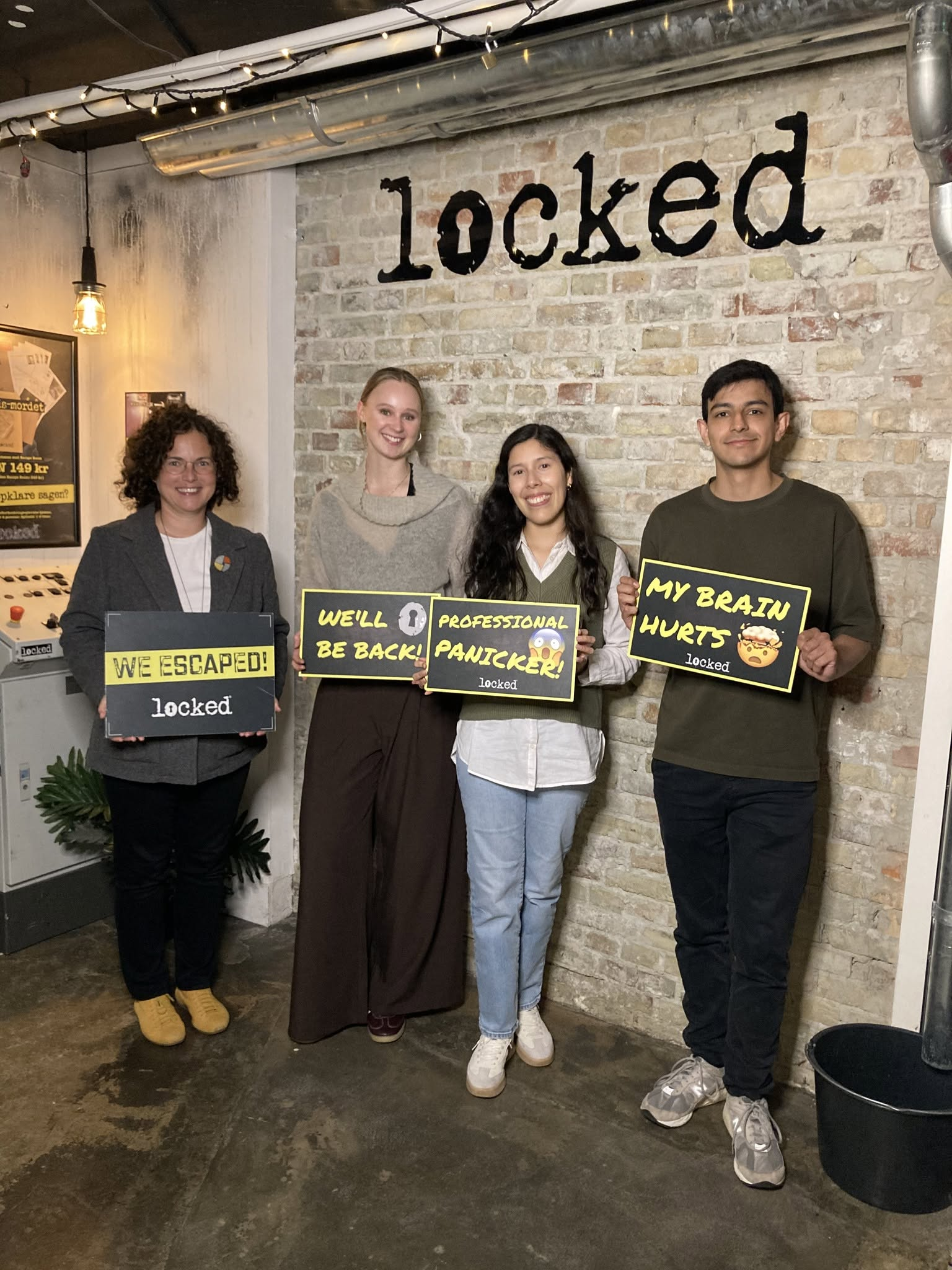
Team photo from Escape Room
Tunde Cserpes
Founder & Principal Investigator | Email | LinkedIn
Rocio Medina Polar
Predoctoral Research Assistant | Email | LinkedIn
Miguel Angel Atencio Alzate
Research Assistant | Email | LinkedIn
Sara Frisk Helstrup
Research Assistant | Email | LinkedIn
Alumni
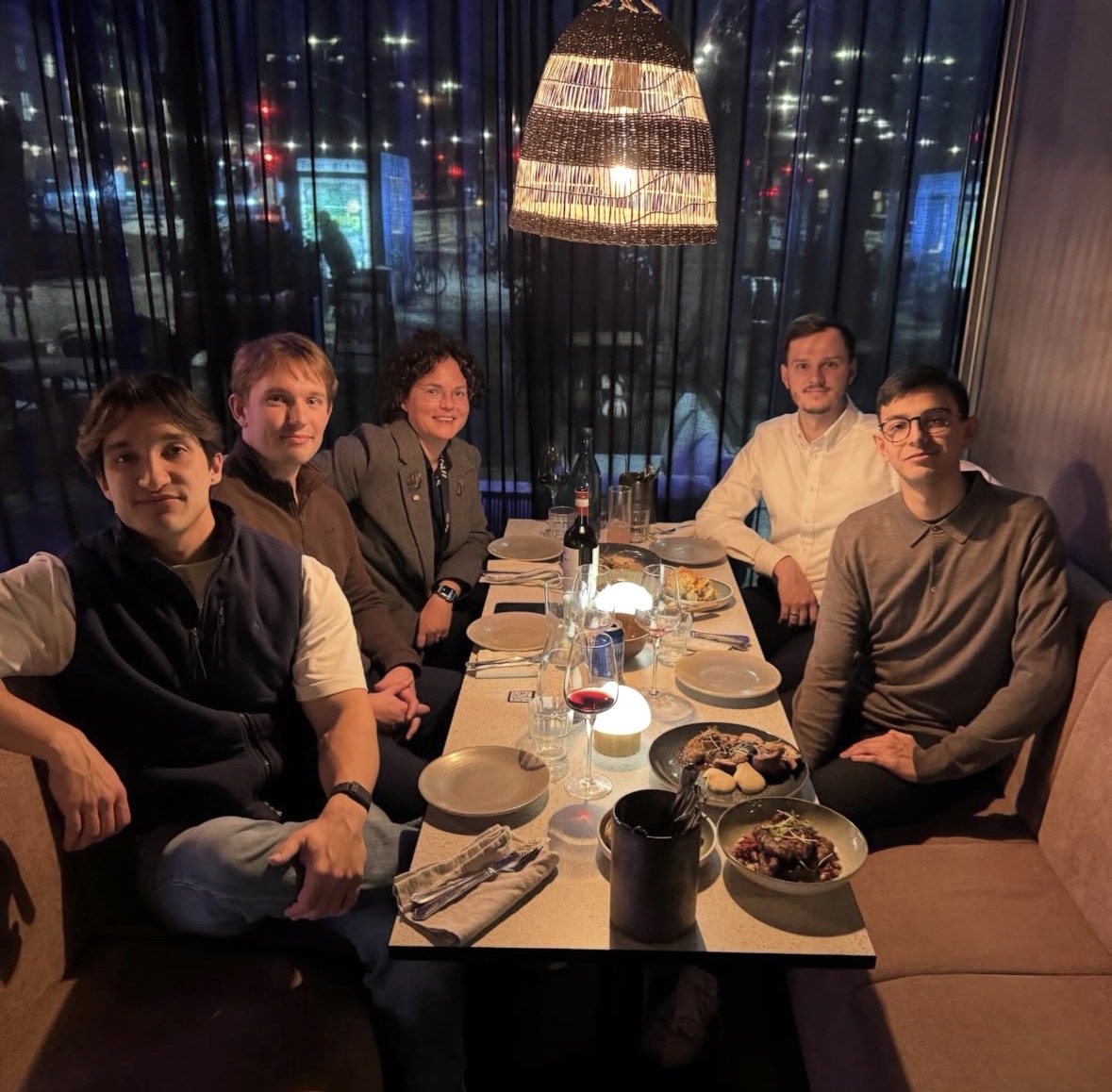
Photo from dinner with previous alumni
Simon Klitaa Thomsen
MSc in Finance | LinkedIn
Pedro Natividade Jørgensen
MSc in Innovation Management | LinkedIn
Avdo Mujcinovic
MSc in Mathematics-Economics | LinkedIn
Want to join?
We periodically recruit bachelor’s students to our development track and master’s students to our research track (see past postings: development track, research track). Student positions are open to students enrolled at Aarhus University. When we are hiring, positions will be advertised. If no advertisement is currently open, you are welcome to send us a short letter of interest and your CV to tunde.cserpes@mgmt.au.dk.
PhD students join ResLab through the Aarhus BSS PhD programme. If you would like to pursue a PhD with us, you must apply through the relevant PhD admission process.
Postdoctoral researchers join when project funding allows us to create a position. Postdoc openings will always be formally advertised.